
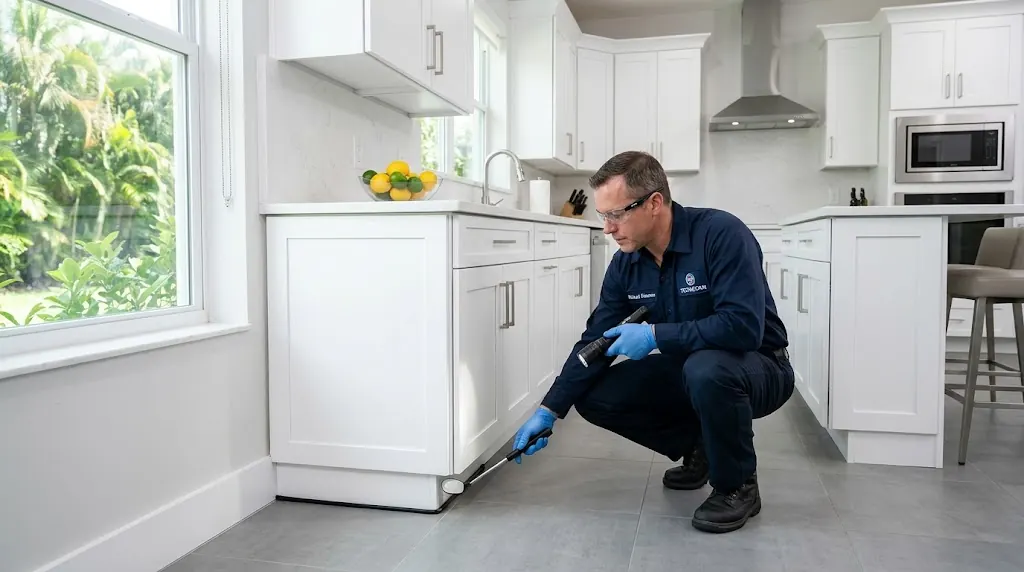
Termite control starts with an inspection to confirm the species and extent of activity, followed by a treatment matched to that species, such as a soil treatment or baiting for subterranean termites, or fumigation or localized treatment for drywood termites. South Florida has several termite types, so identifying the right one matters.
Termites feed quietly inside wood, and damage can be extensive before it is visible. If you suspect them, call Fort Lauderdale Pest Control and we offer termite inspections in Fort Lauderdale. This is one of the services where getting a proper identification first changes everything that follows, which is why our local pest control service always begins with a conversation about what you have found.
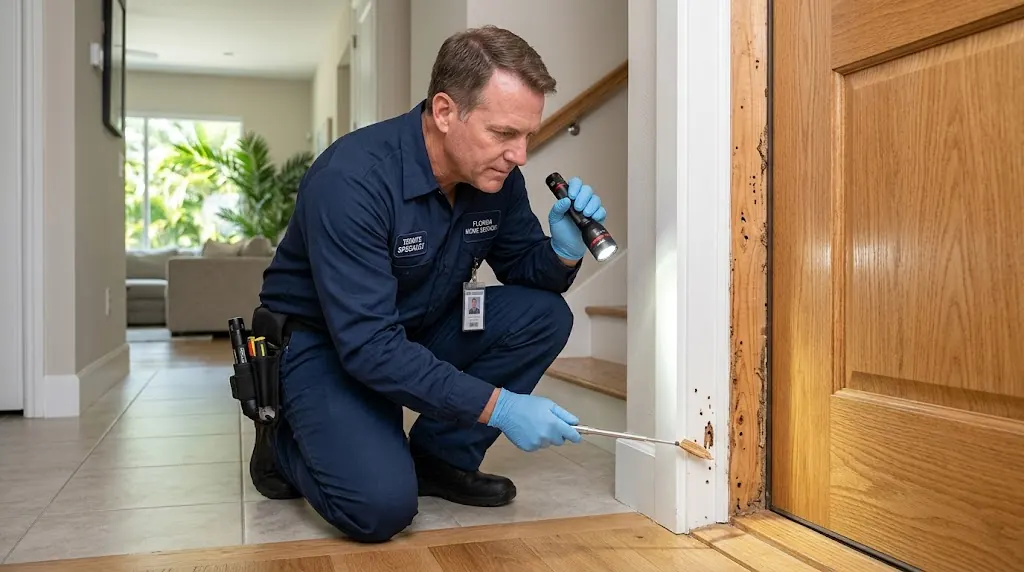
Termites found in South Florida
| Type | Where they live | Typical clue |
|---|---|---|
| Subterranean | Colonies in the soil, travel to wood through mud tubes | Pencil-width mud tubes on foundations or walls |
| Formosan (a subterranean species) | Large soil colonies, sometimes nesting inside structures | Swarms at dusk, heavy wood damage |
| Drywood | Live entirely inside dry wood, with no soil contact | Tiny six-sided fecal pellets (frass) near wood |
How can you tell if you have termites?
- Discarded wings near windows, doors or light fixtures after a swarm.
- Mud tubes on foundation walls, piers or inside crawl spaces.
- Small piles of pellet-like frass beneath furniture, window sills or trim.
- Wood that sounds hollow when tapped or has blistered paint.
- Doors or windows that suddenly stick.
None of these alone proves termites. A licensed inspector can confirm what you are seeing.
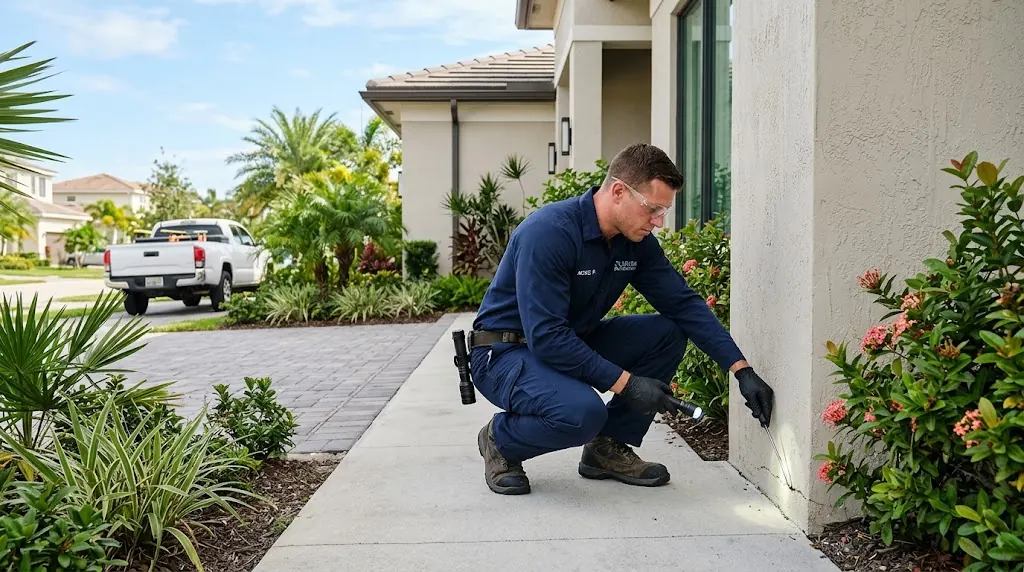
Treatment options we may discuss
- Liquid soil treatment: creating a treated zone around the structure for subterranean termites.
- Baiting systems: stations placed around the property to intercept foraging termites.
- Fumigation (tenting): whole-structure treatment for widespread drywood infestations; occupants must leave during the process.
- Localized or spot treatment: targeted treatment of limited drywood areas.
- Wood repair or replacement: usually handled separately from treatment.
Which option makes sense depends on the species, how far the activity has spread and the construction of your home. Ask us why they recommend a method and what is covered if termites return.
Do you need a termite inspection when buying or selling in Florida?
In Florida, a wood-destroying organism (WDO) inspection is commonly requested during real estate transactions. If you are buying or selling in Fort Lauderdale, tell us and we can schedule the inspection. Timing and report requirements are set by the contract.
How much does termite control cost in Fort Lauderdale?
Termite treatment prices vary widely because the method, the size of the structure and the extent of activity all matter. Be cautious of any quote given without inspecting the property. Also ask whether the price includes a warranty or annual renewal and what that warranty actually covers.
Where we handle termite control calls
Older wood-frame homes in neighborhoods such as Victoria Park and Rio Vista are good candidates for a periodic termite inspection, and homeowners across the city often combine it with ongoing residential pest control.
See about our team or visit our contact page.
Related services
Frequently asked questions
How do I tell termites from flying ants?
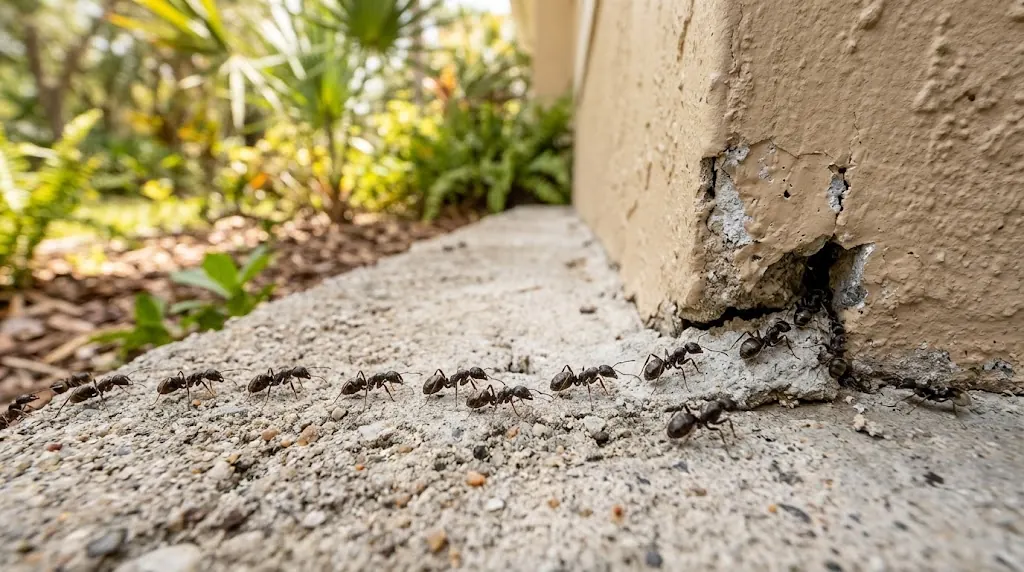
Termite swarmers have straight antennae, a thick waist and wings of equal length. Flying ants have bent antennae, a pinched waist and front wings longer than the back. We can confirm which you have; see also ant control.
Do I have to leave my home for termite treatment?
Only for some methods. Fumigation requires you to vacate for a period we will specify, while soil treatment, baiting and spot treatment usually do not.
Is termite damage covered by homeowners insurance?
Policies commonly exclude termite damage, but terms vary. Check your own policy or ask your insurer.
Can I treat termites myself?
Store-bought products rarely reach whole colonies or hidden infestations. A professional inspection is the reliable way to know what you have and how far it has spread.
How much does termite treatment cost in Fort Lauderdale?
Prices vary widely by method (soil treatment, baiting, fumigation or spot treatment), structure size and the extent of activity. Be wary of quotes given without an inspection, and ask what any warranty or renewal covers.
What is the difference between tenting and spot treatment for termites?
Tent fumigation treats an entire structure and is used for widespread drywood infestations, requiring occupants to leave. Spot or localized treatment targets limited areas of drywood termites. We decide based on what the inspection finds.
What does a termite warranty cover?
It varies by plan and product. Some cover only retreatment, others may include repair of new damage. Ask for the terms in writing, including renewal fees and exclusions.
Sources and further reading
- UF/IFAS: Termite Species Distribution in Florida and UF Termite Identification Services (ENY-2079)
- University of Florida News: Invasive termites threatening Florida homes are spreading farther than predicted (2026)
- Florida Department of Agriculture and Consumer Services: Structural/Residential Pest Control (Chapter 482) licensing contacts
- Florida Statutes, Chapter 482: Pest Control (Florida Senate)
Last updated: .
Ready to get rid of pests in Fort Lauderdale?
Call now and tell us what you are seeing. Our team can inspect, explain the options and quote the work.
Serving Fort Lauderdale, FL · Quote before work begins